
October 16, 2026
zebratech
Why Do Local Contractors Need to Think Carefully About Business Liability Coverage?
Contractors spend their days solving practical problems such as repairing, installing, building, and improving properties for their customers. But the work also brings them into situations where an injury, property damage, or a problem with completed work can create an unexpected financial burden. That is where Business Liability Insurance in Santa Barbara becomes worth considering.
For local contractors, the question is not simply whether to have insurance, but whether the coverage reflects the way the business actually works.
A Brief Overview
-
- Contractors can face liability exposures during work and after a project is completed.
- General liability insurance can help address certain third-party injury and property damage claims.
- Other business insurance may cover areas such as property, vehicles, employees, or professional services
- Policy limits, exclusions, and coverage terms matter just as much as having a policy.
What Does Business Liability Coverage Mean for Local Contractors?
The work contractors handle can take them across different job sites and properties.
One day might involve fixing a roof; another could mean installing flooring, remodeling a kitchen, or working on a commercial property. Each job brings different people, properties, and activities into the picture, which can create different liability exposures.
California has a sizeable construction sector. The U.S. Census Bureau recorded 85,352 construction establishments in the state in 2022, including 24,382 residential building construction establishments. With so many businesses operating across different types of construction work, liability exposures can vary considerably from one contractor to another.
Commercial general liability insurance addresses several common liability exposures contractors may face. California’s Department of Insurance identifies three primary areas: premises liability, products liability, and completed operations.
For contractors, completed operations can be particularly relevant because liability concerns do not necessarily end when the crew leaves the jobsite. Coverage, however, depends on the policy’s terms, exclusions, and limits.

Why Can Contractors Face Different Liability Risks?
A contractor’s exposure can vary based on the services they provide and the way their business is run.
Some of the key areas a contractor may need to consider include:
- Work performed at customer properties or other job sites
- Employees working around customers, equipment and materials
- Business property and tools used during operations
- Company vehicles travelling between jobs
- Professional advice or services provided to clients
- Potential issues that arise after work has been completed
That is why a policy designed around the actual business is more useful than treating every contractor as having the same insurance needs.
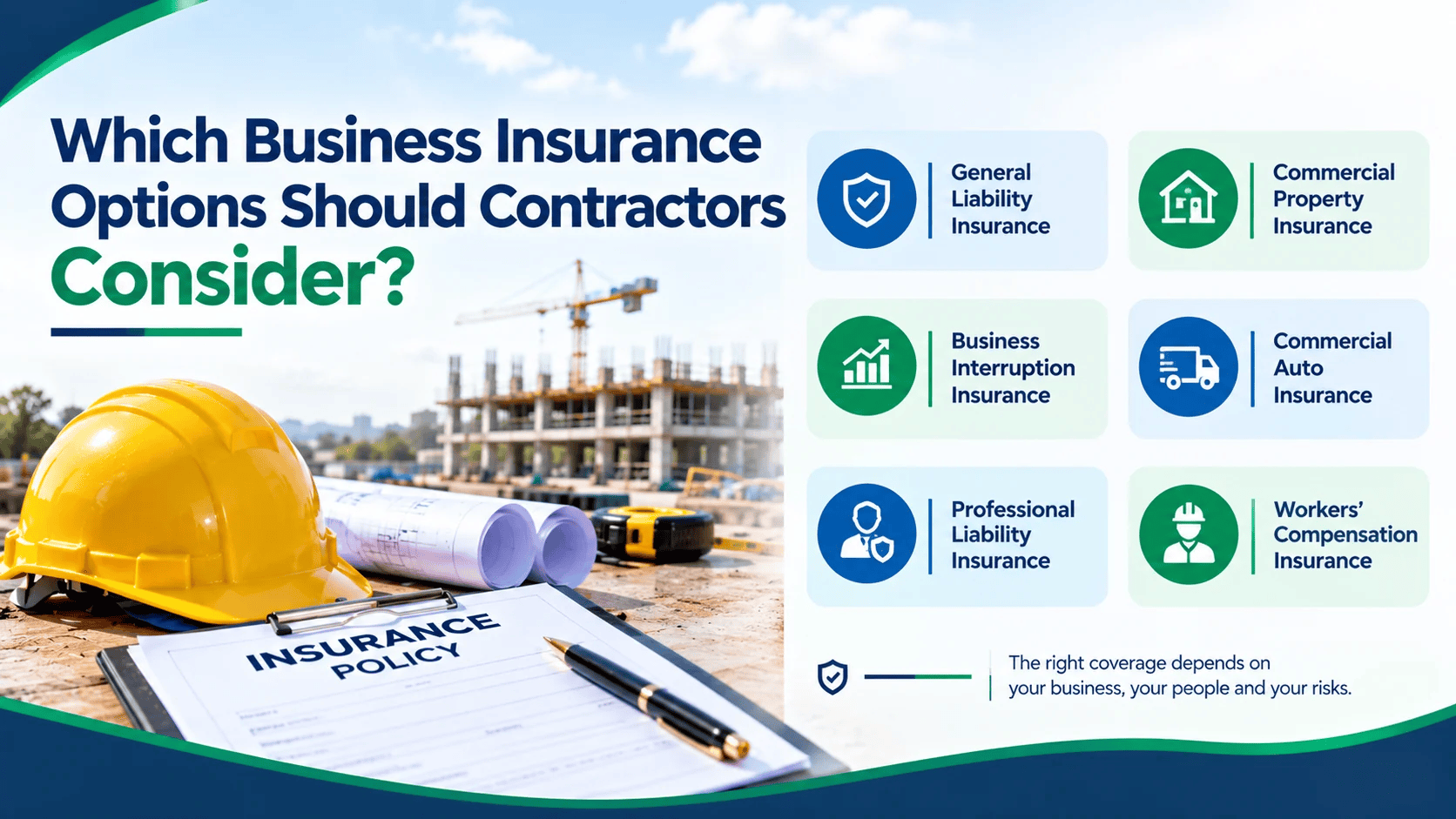
Which Business Insurance Options Should Contractors Consider?
Not every contractor faces the same risks, so there is no one-size-fits-all insurance package. The right commercial insurance options can vary based on the contractor’s work, workforce, property, and vehicles.
- General liability insurance: Addresses covered claims involving bodily injury, personal injury, advertising injury, and property damage.
- Commercial property insurance: Can address covered damage to business equipment and property.
- Business interruption insurance: Can cover lost income and certain extra expenses after a covered incident forces the business to stop operating.
- Commercial auto insurance: Relevant when a business uses vehicles for its operations.
- Professional liability insurance: Addresses certain claims involving negligence, misrepresentation, or inaccurate advice.
- Workers’ compensation insurance: In California, businesses with one or more employees generally must provide workers’ compensation benefits, with specific rules also applying to certain contractors without employees.
Not every contractor needs every coverage. The coverage a contractor needs will depend on how the business operates and the risks it faces.
When Should Contractors Reassess Their Insurance Coverage with an Insurance Agent?
Insurance needs can change as a contracting business grows, adds employees, buys vehicles, or takes on different types of work.
A licensed insurance agent can review the business and help identify coverage gaps, limits, exclusions, and endorsements that may need attention, such as:
- Are the current coverage limits appropriate for the business?
- Are important exclusions or gaps being overlooked?
- Has a change in operations affected the insurance needs?
- Are different types of coverage being confused or duplicated?
What If a Contractor Has the Wrong Coverage?
A policy may look adequate until a claim exposes a gap. Coverage can be affected by exclusions, limits, classifications, and policy conditions. Even a policy with broad protection may not respond to every situation a contractor encounters.
For that reason, contractors should review their policies when their business changes rather than waiting until an incident occurs.
Frequently Asked Questions
What does general liability insurance cover for contractors?
Do contractors need more than general liability insurance?
Why should contractors review their insurance regularly?
Keeping Your Contracting Business Protected With CoreGen
A contracting business is built one project at a time, but protecting it takes more than getting the next job across the finish line. As your work, team, and responsibilities grow, your Business Liability Insurance in Santa Barbara should keep pace.
We at CoreGen Insurance Agency, LLC understand that no two businesses operate in exactly the same way. We can help you explore business insurance options based on your operation and coverage needs.
Reach out to discuss your options and request a free, no-obligation quote.